
TMJ Pain: Causes, Symptoms, and Effective Treatments
November 12, 2025
Dental crown vs. filling: what’s the difference and which one do you really need?
December 30, 2025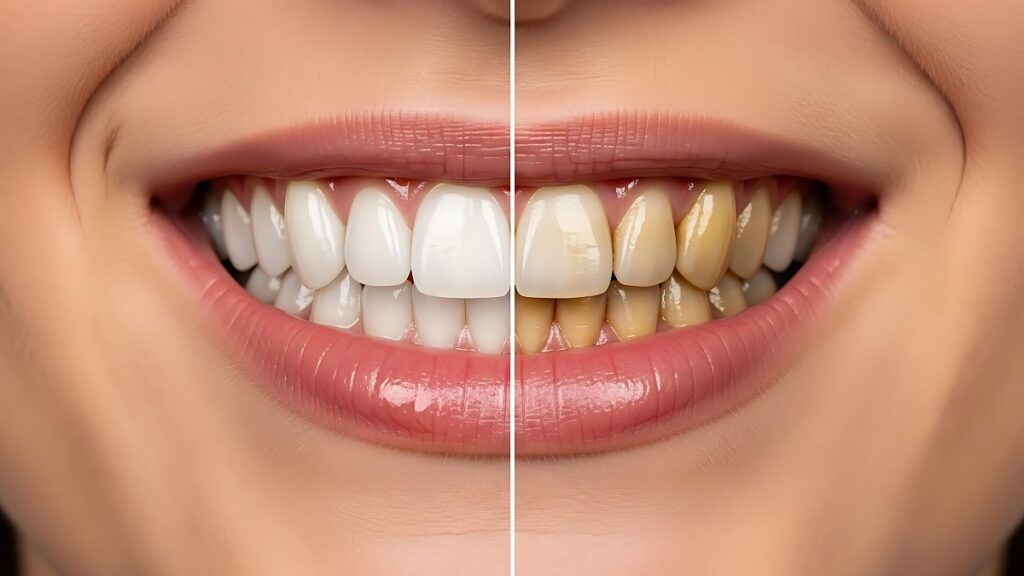
Teeth whitening and bleaching: options, risks, and how to choose what’s best for your smile
A bright, white smile can change the way you look — and the way you feel.
Teeth whitening is one of the most popular cosmetic dental treatments today because it is fast, minimally invasive, and capable of delivering visible results in a short time. But not every whitening method works the same. Some options are safe and supervised, while others can cause sensitivity, uneven results, or even damage if used incorrectly.
In this guide, we’ll explain how teeth whitening works, the different options available, the risks you should know about, and how to choose the safest and most effective treatment for your smile.
What exactly is teeth whitening?
Teeth whitening is a cosmetic procedure designed to lighten the shade of natural teeth by removing internal and external stains from the enamel.
Over time, stains build up because of:
- Coffee, tea and soda
- Red wine and dark sauces
- Tobacco use or vaping
- Natural aging
- Certain medications
- Poor oral hygiene habits
Professional whitening uses dental-grade bleaching agents such as hydrogen peroxide or carbamide peroxide. These agents penetrate the enamel and break down stain molecules — without removing enamel or changing the structure of the tooth when used correctly.
It’s important to remember: whitening lightens natural teeth, but it does not change the color of crowns, veneers, fillings or bridges.
Professional whitening vs. at-home whitening: what’s the difference?
Not all whitening systems work the same way. Understanding your options helps you make a safer decision.
In-office professional whitening
This treatment is done entirely at the dental office under professional supervision.
Typical benefits include:
- Stronger, controlled whitening formulas
- Faster results — often several shades lighter in one visit
- Protection for gums and soft tissues
- Customized treatment depending on tooth sensitivity and dental history
This is often ideal for patients preparing for an important event or for those who want predictable and noticeable results.
Custom dentist-supervised take-home trays
In this option, the dentist creates custom trays that fit your teeth perfectly and provides professional whitening gel to use at home.
Advantages:
- Gradual whitening over 1–2 weeks
- More comfortable fit compared to store-bought trays
- Lower risk of irritation
- Ideal for maintenance after in-office whitening
This is a great option for patients who prefer slower, controlled whitening.
Over-the-counter whitening kits and strips
These products are widely available — but they don’t always perform the same way as dentist-supervised whitening.
Limitations include:
- Lower bleaching concentration
- One-size trays that may not seal properly
- Higher risk of gum irritation
- Uneven or patchy results
- Short-lasting effects
They can help mild surface stains, but they are not recommended for moderate staining, sensitive teeth, or dental restorations.
Is teeth whitening safe?
When performed correctly and supervised by a dentist, whitening is considered safe.
However, there are situations where whitening may not be recommended, such as:
- Untreated cavities
- Gum infections or periodontal disease
- Cracked teeth
- Pregnant or breastfeeding patients
- Teeth with large restorations or crowns in the front
The dentist always evaluates your oral health first. Treating underlying problems before whitening prevents complications and reduces sensitivity.
Possible side effects: what should you expect?
Most patients experience little to no discomfort, but some may feel temporary sensitivity.
Common short-term side effects include:
- Sensitivity to cold
- Mild gum irritation
- Slight discomfort when biting
These effects usually disappear within 24–48 hours.
If whitening is overused or incorrectly applied, more serious complications can occur — such as enamel irritation or gum burns. That’s one of the reasons professional guidance is so important.
How long do results last?
Teeth whitening isn’t permanent — but with proper care, results may last anywhere from 6 to 18 months.
To keep your smile bright:
- Limit dark drinks (coffee, tea, cola, wine)
- Rinse your mouth after staining foods
- Avoid smoking and vaping
- Maintain regular dental cleanings
- Use dentist-recommended touch-up whitening when needed
Daily habits play a big role in how long results stay visible.
FAQS
Does whitening damage my enamel?
No — not when supervised by a dentist and used correctly.
Can I whiten crowns or veneers?
No. Only natural enamel whitens. Restorations may need replacement if color mismatch occurs.
Is whitening painful?
You may feel mild sensitivity, but most patients tolerate whitening comfortably.
How white will my teeth get?
The goal is not “paper white,” but a natural shade that matches your features and skin tone.
Who is a good candidate for teeth whitening?
You may be a good candidate if:
- Your teeth are healthy and cavity-free
- Your stains are caused by food, drinks or aging
- You want a brighter, more youthful smile
You may need a different treatment if discoloration is caused by medications, trauma, or developmental conditions. In those cases, options such as veneers or bonding may be more effective.
A dental examination determines the best option — without guessing.
Choosing the best whitening option for your smile
The “best” whitening treatment depends on:
- Your stain type
- Your tooth sensitivity
- Whether you have crowns or fillings in front teeth
- Your expectations and timeline
- Your budget
That’s why professional evaluation is always the first step. Whitening isn’t just cosmetic — it’s part of a broader plan to protect your teeth while improving your smile.
Conclusion
Teeth whitening is a safe and highly effective way to refresh your smile — as long as it is done with guidance, the right system, and realistic expectations. Working with a dentist ensures brighter results, fewer risks and a plan tailored specifically to your teeth.
If you’re thinking about whitening, the most important first step is a dental consultation. From there, your dentist can recommend the option that fits your smile, lifestyle and goals.