Teeth whitening and bleaching: options, risks, and how to choose what’s best for your smile
December 16, 2025
Why do teeth hurt without visible cavities?
January 16, 2026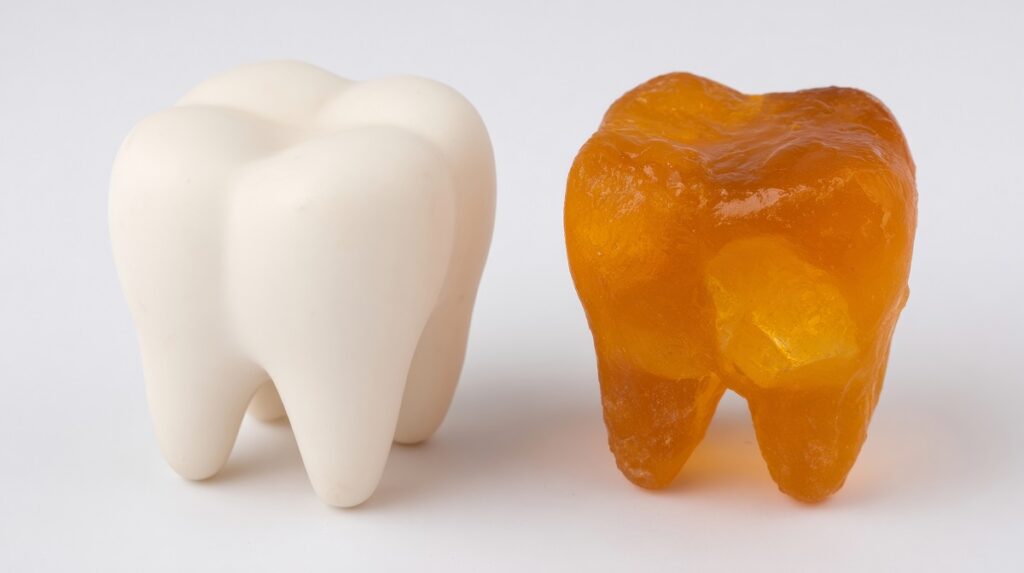
Dental crown vs. filling: what’s the difference and which one do you really need?
Hearing that you need “a filling” or “a crown” can feel confusing — especially if the tooth doesn’t hurt yet. Both treatments are meant to repair and protect damaged teeth, but they work in very different ways.
Choosing the right option isn’t simply about looks. It has everything to do with preserving tooth structure, preventing fractures, avoiding infection, and reducing the risk of future dental emergencies.
In this guide, we’ll explain:
- what a filling is
- what a dental crown is
- when dentists recommend one over the other
- what happens if the wrong treatment is chosen
Our goal is to help you understand your options clearly — so you can feel confident about your treatment plan.
What is a dental filling?
A dental filling is used when decay or damage affects a small portion of the tooth.
Here’s how it works:
- The dentist removes the decayed area.
- The space is cleaned thoroughly.
- A tooth-colored composite resin is placed.
- The material is shaped, hardened, and polished.
The goal is simple: remove bacteria, restore function, and keep as much natural tooth as possible.
When fillings are ideal
Fillings work best for:
- small to medium cavities
- chipped areas from minor trauma
- early decay detected on X-rays
- teeth with limited structural damage
Benefits include:
- conservative treatment
- quick appointment
- natural appearance
- affordable option
- preserves most of the original tooth
However, fillings have limits. If too much tooth structure is missing, the material cannot support biting pressure long-term.
What is a dental crown?
A dental crown acts like a protective “cap” that completely covers and reinforces the tooth from all sides.
Instead of filling a space, a crown surrounds the tooth to prevent cracks, fractures, or further breakdown.
Crowns may be made of:
- porcelain
- zirconia
- porcelain fused to metal
They are carefully color-matched to blend with your natural teeth.
When crowns are recommended
Dentists typically recommend crowns when the tooth is too weak to hold a filling securely, such as:
- large cavities covering more than half the tooth
- cracked, fractured, or severely worn teeth
- teeth that have undergone root canal treatment
- teeth with large, old failing fillings
- teeth weakened by grinding or clenching
Benefits:
- strengthens and protects the tooth
- reduces risk of future fracture
- restores chewing ability
- long-lasting results
- highly aesthetic appearance
A crown is an investment in preserving the tooth long-term — often preventing more invasive treatment later.
Crown vs. filling: how dentists decide
Dentists evaluate several factors before recommending treatment:
- Amount of remaining healthy tooth
- Location of the tooth (front vs. molars)
- Bite pressure
- Presence of cracks
- History of previous dental work
- Risk of future fracture
A general rule many dentists follow:
If more than 50% of the tooth is damaged, a crown provides better long-term stability than a filling.
A filling in a weakened tooth may work temporarily — but behave like a plug trying to hold together something that is already breaking apart.
What happens if a filling is used when a crown is needed?
It might seem cheaper at first — but long-term risks increase significantly.
Possible outcomes:
- tooth fracture
- pain when chewing
- bacteria leakage
- recurrent cavities around the filling
- inflammation or infection
- need for root canal later
- tooth loss in severe cases
In many cases, patients end up paying more because the tooth needs multiple treatments to fix what a crown could have stabilized earlier.
That is why dentists recommend the option that protects the tooth — not just the one that costs less upfront.
FAQs
Do dental crowns hurt?
The procedure is done with local anesthesia. Most patients feel comfortable during treatment.
How long do crowns last?
With good care, many last 10–15 years or longer.
Will my crown look natural?
Yes — crowns are matched to the color and shape of your smile.
Can a cavity still form under a crown?
Yes, if bacteria collect along the gumline. Good hygiene and regular cleanings are essential.
Is a crown always required after a root canal?
For back teeth, usually yes — because they endure strong chewing pressure.
Crowns and fillings are both important — but for different reasons
A filling is like patching a small area.
A crown is like reinforcing the entire tooth.
Neither treatment is “better” than the other — the right choice depends entirely on structural strength, decay depth, and long-term stability.
The goal is always the same:
Save the tooth, protect function, and avoid future complications.
If your dentist recommends a crown instead of a filling, it’s usually because they see signs that the tooth may not withstand everyday forces without reinforcement.
Conclusion
Understanding the difference between crowns and fillings empowers you to make informed decisions about your dental health. The best treatment is always the one that keeps your tooth strong, pain-free, and functional for as many years as possible.
If you’ve been told you may need a crown or filling, the most important step is a thorough evaluation. A personalized assessment ensures your tooth receives the right level of protection — not more, and not less.