Full Mouth Reconstruction
January 20, 2023
NightLase
February 17, 2023
Tooth buccal
Sometimes Dental jargon can be very confusing, while there are many terminologies thrown about when you visit the dentist, we want to shed some light on what it means when we say “you have a buccal” or need a buccal filling.
What is a tooth buccal?
When you normally visit us for a routine check-up, we will feel all your teeth and document their state and underlying gums. The word buccal may be tossed around and you might not know what this means. Buccal, is the surface of your tooth that faces your cheeks.
When you hear Dr. Vishart is saying: “this tooth needs a buccal,” it means that a certain tooth needs it’s buccal surface filled.
5 five surfaces of teeth
As dentists, we have specific terms used to refer to areas of a teeth, and they are:
- Occlusal – the top surface or chewing surface of the tooth.
- Mesial – this is a side surface of the tooth; the side that is closer to the front of the mouth.
- Distal – this is also a side surface of the tooth, the side that is closer to the back of the mouth.
- Lingual – the inner surface of the tooth that faces the tongue.
- Buccal – the outer surface of the tooth that faces the cheek.
The importance of the buccal surface
It’s common knowledge that teeth surfaces that are smooth and plain are easier to clean. Your mouth does a bit of self-cleaning throughout the day with saliva flow and continuous movements of your tongue. This is how your mouth cleans itself by not letting bacteria to grow and multiply and preventing most infections and cavities.
The buccal surface is also generally smooth. However, sometimes some teeth can develop buccal pits, where food can get stuck. These pits between the cusps need special attention while brushing to avoid cavities and further tooth decay.
Tooth decay – What causes buccal cavities?
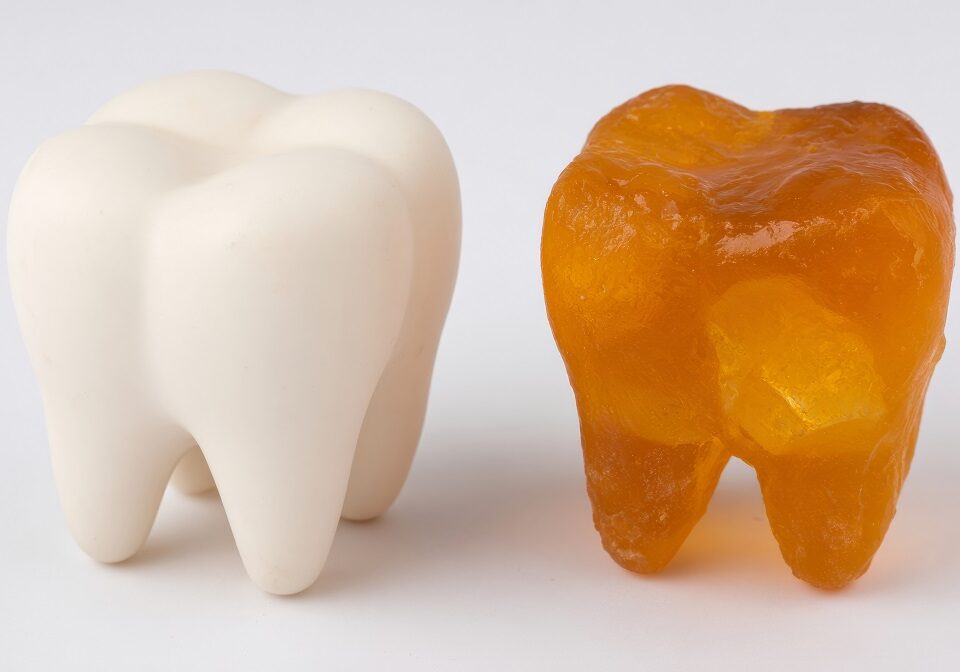
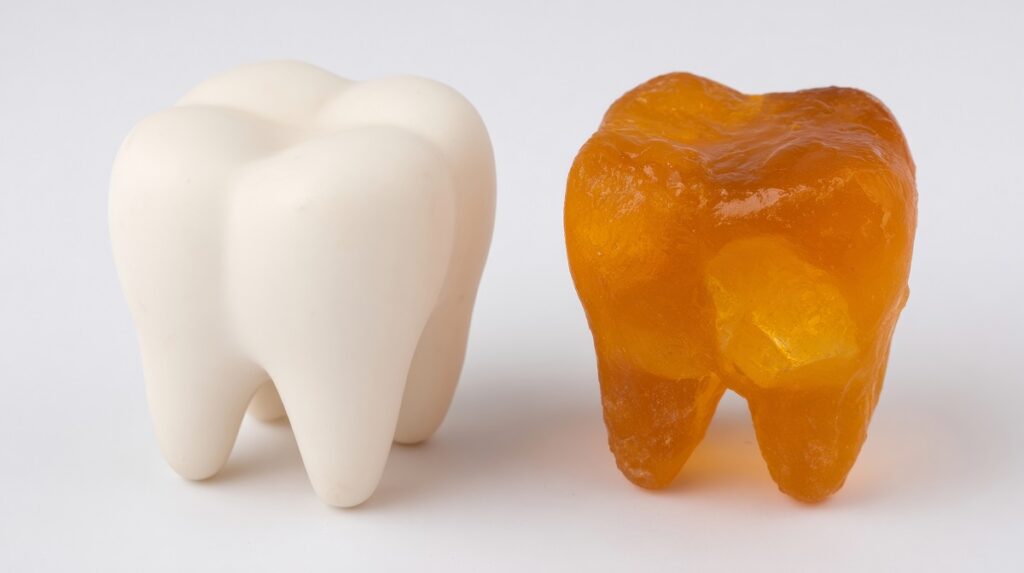
Tooth decay, is a process by which bacteria in the mouth creates a sticky film, called plaque, that builds up and spreads on your teeth surfaces over time. When you consume foods or beverages containing sugar or other carbohydrates, certain types of plaque bacteria constantly feed on these particles, producing acid as a byproduct.
Dental plaque cannot be washed away with saliva or water. When you don’t do a good job of cleaning your teeth on a regular basis, bacteria begins feeding on the starches and sugars. The acids in plaque remove minerals in your tooth’s hard, outer enamel. Once through this layer, the bacteria can attack the softer, inner layer of your teeth.
Tooth decay can be found in places where bacteria sits undisturbed, eventually getting into the inner layers of your tooth, gaps between teeth and grooves of chewing surfaces.
Buccal cavities form due to a combination of oral bacteria, poor oral hygiene, and poor eating habits. Like any cavity, if left untreated it can cause an infection and even cause tooth loss.
Buccal Pit Fillings
Dental fillings are used to restore tooth structure that has been lost due to decay or fracture. Fillings are used to close these holes and prevent any further damage or decay.
A buccal filling is used when you have a cavity on the tooth’s buccal surface and is needed if there is a gap between the enamel and gum.
Do you need a buccal filling?
If you’re unsure whether or not you need buccal fillings, let us tell you this, cavities don’t get better on their own. And if left untreated they can get worse over time.
Once tooth decay has gone past the enamel, brushing can even make it worse and exacerbate the situation. By that point, even a filling might not be enough treatment to save your tooth or prevent a serious infection. Instead, we might need to try more invasive treatments like a root canal.
Different fillings for buccals?
There are several different types of buccal fillings and we sill discuss which is best for you.
- Composite Fillings
They are made up of acrylic resin and finely ground, glasslike particles. This produces the most natural appearance for your restoration. Composite fillings are incredibly versatile and durable, withstanding moderate chewing pressure.
- Glass Ionomer Fillings
Glass ionomer fillings are tooth-colored and easily bond with tooth tissue. They slowly release a fluoride over time to help prevent decay under and around the filling. These look natural, as they can easily be made to suit your tooth color.
- Porcelain Inlays
They are a popular choice due to their ability to be matched to the color of the natural tooth and their stain resistance.
How long does a buccal filling last?
The life of your buccal filling depends on the material used and how well it is looked after.
- Amalgam Fillings
They last between 10-15 years before being replaced.
- Composite Resin Fillings
These fillings don’t last very long by comparison. They need to be replaced every 5-7 years. - Porcelain Fillings
Because porcelain is on the brittle side, they can last anywhere from 5-10 years.
Does a buccal filling hurt? 50
Dental fillings are not painful if they are properly managed with anesthetics. Small surface buccal cavities are no different and can be filled with little to no discomfort in less than 30 minutes.
There are several options for the type of filling used and the type of anesthetic you might need. Talk to us on your next visit and we can discuss what are the best choices for you.
Proper brushing, flossing and overall oral cleanliness are the best line of defense against buccal cavities. Schedule an appointment at Digital Dental Studio for a cleaning or another dental procedure or to discuss the best options for preventing tooth decay.